


Ecotect Engineering is a fire suppression specialist based in Manchester, installing residential and commercial sprinkler systems across England and Wales. The company works almost exclusively in new build, with 98% of its projects on residential and mixed-use development schemes.
The company ran its installation process on paper, which came with its set of problems. Drawings, risk assessments and commissioning records all had to travel back and forth between site and office by hand. Fieldwire gave Ecotect a single digital record instead, built around bespoke tasks that let engineers carry out progress updates and quality checks as they install rather than after the fact. Suzanne Taylor, Managing Director, led the move to digital record-keeping alongside Katy Bradley, Contracts Administrator, who managed the rollout to engineers on site.
Ecotect at a glance
Location: Manchester, England
Sector: Fire suppression — residential and commercial sprinkler systems
Working area: England and Wales, 98% new build
Started using Fieldwire: April 2025
Key Fieldwire use cases:
- Task management (bespoke, multi-stage tasks)
- Plans and drawings
- Custom and scheduled reports
- Forms and checklists
- Geo-timestamped photos
The challenge: moving from paper to digital
Ecotect's installation process ran on paper. Engineers marked up drawings by hand on site, then carried them back to the office for the design team to update. Risk assessments and method statements existed only in hard copy. The servicing side of the business already had a digital system, but it wasn't built for installation work, so there was no existing template Ecotect could simply extend.
The company had recognised the case for going digital before it acted on it. Hilti's wider construction software suite, including Fieldwire, was pitched to Ecotect informally around 18 months before it came on board. At the time, it was one option among several the company was weighing.
The paper trail also slowed down commissioning. On large apartment schemes with many near-identical units, matching a photograph back to the right flat was a manual task, both on site and later at the office. That problem was only going to grow as compliance obligations on residential buildings increased.
The solution: more efficiency with Fieldwire
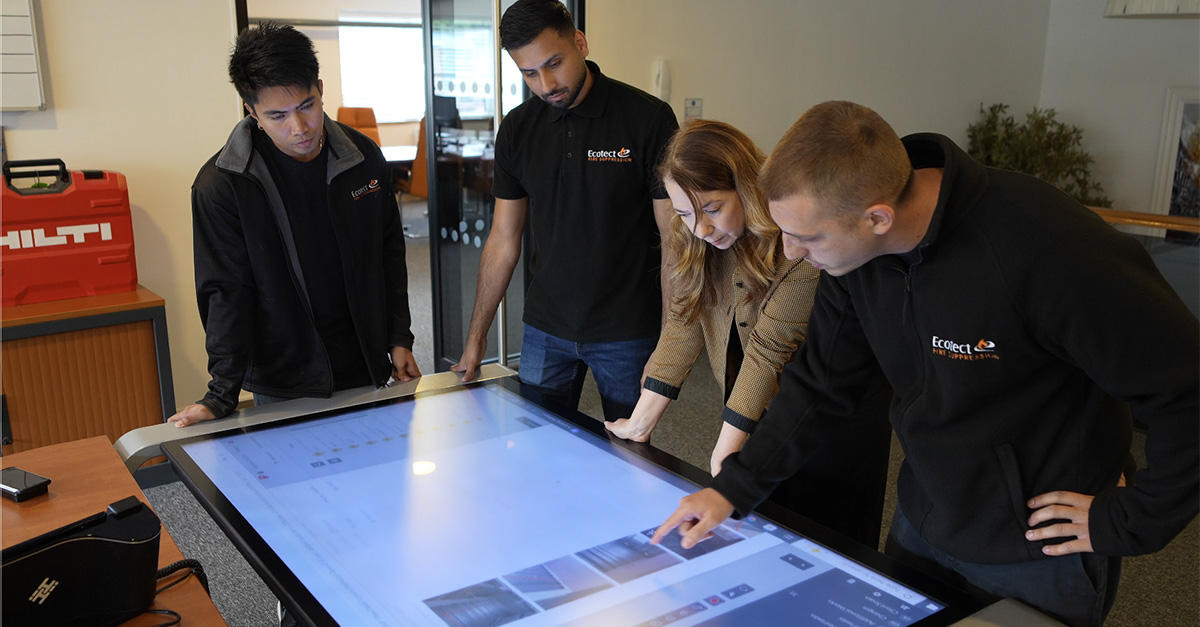
Around a year after that first conversations, Ecotect looked at Fieldwire in detail and committed to it. Because most of its engineers are directly employed, the company could standardise on a single platform across the business, rather than accommodate a mix of subcontractor preferences.
The rollout itself was gradual by intent. Ecotect began with a small group of engineers and a handful of projects, working with the Fieldwire team to build out custom task categories before extending the system further.
Getting the task structure right took some adjustment early on. Ecotect initially thought of a task as a single snag or a piece of additional work. In-person sessions with the Fieldwire team reframed that idea: a task could represent an entire room, carrying every stage of the fit through to sign-off, from first fix through mid-fix, second fix and final checks.
How Ecotect uses Fieldwire
Task-based quality assurance
With input from the Fieldwire team, Ecotect built bespoke tasks and checklist questions around its own installation stages. Engineers now carry out their own progress updates and quality assurance as they work through each task. A separate pre-commissioning check is always completed by someone other than the installing engineer, which matters given the product being installed is life-safety fire protection.
Real-time drawings and communication
When Ecotect's design team updates a drawing, engineers on site see the change straight away and can also raise their own query to design. Engineers only proceed once a task has been assigned, so the system also prevents work going ahead before a design query or client decision has been resolved. That holds engineers back from scope creep while stakeholders agree the way forward.
Photographic evidence and compliance
Geo-timestamped photographs, taken within the task process, give Ecotect dated, located evidence for variations and for third-party and ISO audits. On schemes with repeated, near-identical layouts, that timestamp and location data confirms exactly which unit a photograph relates to. It replaces what used to be a manual matching exercise back at the office.
Reporting
Custom reports pull the task record together for each client at the click of a button, filtered to what that client needs to see. Ecotect has also set up automatic reports for the design team and management on a weekly and monthly basis, which removes the need to manually compile photographs and write-ups for routine updates.
The results: faster certification and a defensible audit trail
Ecotect's clearest gains have come in the speed and defensibility of its paperwork, more than in the physical pace of installation work itself. Commissioning results now come back from site the same day and are reviewed within a couple of days. That has cut the time between finishing a job and issuing a certificate to the client.
Real-time visibility of drawing changes means genuine additional work gets captured as it happens. It can then be billed to the client as a variation, rather than absorbed unrecorded. Construction is also becoming more legislation-driven, as Taylor points out, with obligations under the Building Safety Act that can require records going back decades. The dated, geo-tagged photographic record gives Ecotect a defensible history it can return to years after a job is finished, without needing to revisit the site.
Taylor also points to another benefit. As Managing Director, she now has visibility of work carried out by engineers who might be on remote sites for days at a time, rather than waiting for drawings to come back to see how a job is progressing.
The bottom line
Asked to sum up Fieldwire in a single word, Taylor's answer came without hesitation.
*What Fieldwire did for Ecotect Engineering, it can do for you. See it for yourself. *


