5 construction tasks robots can handle more safely


Construction remains one of the most hazardous industries in the United States. Fall hazards, heavy equipment, silica dust, electrical exposure and repetitive strain put workers at risk daily. Robotics has become a practical way to mitigate these risks, particularly in tasks where human operators are at the highest risk of injury.
Discover five tasks where robots offer meaningful safety advantages, plus how different models work, where they’re being deployed, and what you should keep in mind when automation isn’t an option.
5 Hazardous Tasks Best Left to Robots
According to recent safety reporting, 62.2% of construction workers perform tasks at height, yet only 31% use proper fall protection. Another 658,240 laborers are exposed to hazardous chemicals each year, often during demolition or the handling of materials. Programmed machines can reduce direct exposure, take on repetitive or high-risk activities and support your team with more predictable performance.
1. Demolition and Hazardous Material Removal
Demolition exposes crews to structural instability, falling debris and harmful substances, such as asbestos, lead paint and silica dust. Even controlled demolition can cause unexpected shifts in materials, placing workers in confined or unstable spaces. Long-term exposure to debris and dust compounds the risk.
Remote-controlled demolition robots enter unsafe structures while the operator stands at a distance. Their ability to break, shear, crush or excavate materials without a human in the hazard zone eliminates fall exposure and reduces contact with airborne contaminants. Precision controls also limit unintended collapses.
Demolition bots are so useful that the market share is expected to grow by 9.5% from 2025 to 2033, with small crawler bots and larger machines said to dominate deconstructive work due to regulatory pressures for increased safety.
2. Bricklaying and Masonry
Traditional masonry demands continuous lifting of heavy materials, awkward positioning and long hours of repetitive motion. These conditions contribute to musculoskeletal disorders, which can reduce long-term career stability for skilled masons.
Automated bricklaying systems reduce the physical strain of stacking and applying mortar. Robots handle the repetitive motions, while the mason maintains control and oversight. This shifts the mason’s role from heavy labor to system supervision and quality management.
The semi-automated mason (SAM) works alongside human masons by lifting, buttering and placing bricks. SAM has been used on school building projects in the Midwest to speed exterior wall construction. Masons reported reduced fatigue during long shifts, and with a 20% increase in efficiency, projects finished faster because the robot maintained a continuous placement rhythm.

3. Welding and Steel Fabrication
Welding exposes you to UV radiation, electrical hazards, toxic fumes and heat. Steel fabrication often requires welders to work in awkward positions on high platforms or narrow beams. These factors combine acute injury hazards with cumulative, long-term exposure risk. Welding is becoming an unpopular occupation, with a projected shortage of 330,000 qualified welders by 2028.
Robotic welding arms deliver consistent welds while keeping operators away from sparks, fumes and electrical hazards. They can perform complex or repetitive welds in controlled environments using scanners to read the work area for optimal results. On-site robots can weld structural connections at height while operators manage the process from a safe location.
Six-axis robotic welding arms are now standard in many prefabrication shops. Structural steel contractors deploy automated welders for beam fabrication, reducing rework rates and keeping welders out of enclosed spaces that previously accumulated hazardous fumes.
4. Working at Height and Exterior Finishing and Inspection
Falls are a top cause of construction industry deaths, with 81% of falls being fatal, causing significant workplace safety issues. Exterior finishing, facade work, coating, cleaning and inspection place your team on scaffolding, ladders or boom lifts where a single misstep can lead to fatal outcomes.
Drones and facade-climbing robots perform visual inspections, mapping, coating and light repairs without requiring you to leave the ground. On high-rise sites, remotely controlled machines can scale building exteriors with suction or magnetic adhesion to hang and clean curtain windows or inspect for defects.
Robotic aerial platforms and stabilizing features on hydraulic lifts, which operate over uneven ground, also reduce the risk of falls. When operators can adjust lift position remotely, they can minimize time spent climbing or manually repositioning equipment. Correctly positioning the lift more than 10 feet from power cables can reduce the risk of electrocution while safely bringing workers closer to the target site.
Powered exoskeletons add an extra layer of safety, reducing fatigue and enhancing stability for individuals who still need to work at heights. Wearing a robotic suit reduces back muscle activity by 48%, minimizing the risk of developing musculoskeletal disorders or injuries.
Commercial contractors integrate drones to inspect, map and clean exterior joints on high-rise buildings. Using drones and robotic lifts cuts inspection time from days to hours, eliminating the need for your team to climb suspended scaffolding.

5. Concrete Work and Screeding
Concrete pouring exposes workers to caustic materials that can cause burns, as well as repetitive strain injuries from screeding large areas by hand. Wet surfaces increase slip hazards, and large pours often require long hours of continuous labor.
Robotic screeding machines automate the leveling and smoothing process, reducing the time spent on fresh slabs. Their precision minimizes the number of manual passes required. Emerging concrete 3D printers reduce direct exposure altogether, producing formwork or entire structures layer by layer.
Laser screeds are used for slab leveling with millimeter accuracy, while automated trowels create advanced finishes in a fraction of the time, without exposing workers to hazardous concrete or additives. Current estimates suggest that robotic trowels can produce 300 square meters hourly, thereby increasing efficiency and meeting deadlines more accurately.
Screeding and concrete automation are starting to enter the renovation sector. Technology used in large-scale builds is increasingly appearing in residential and commercial renovation projects, reshaping how additions and structural upgrades are completed. Additionally, 3D printing machines can print components and even complete structures, working around the clock.
Safety Protocols When Robots Aren’t an Option
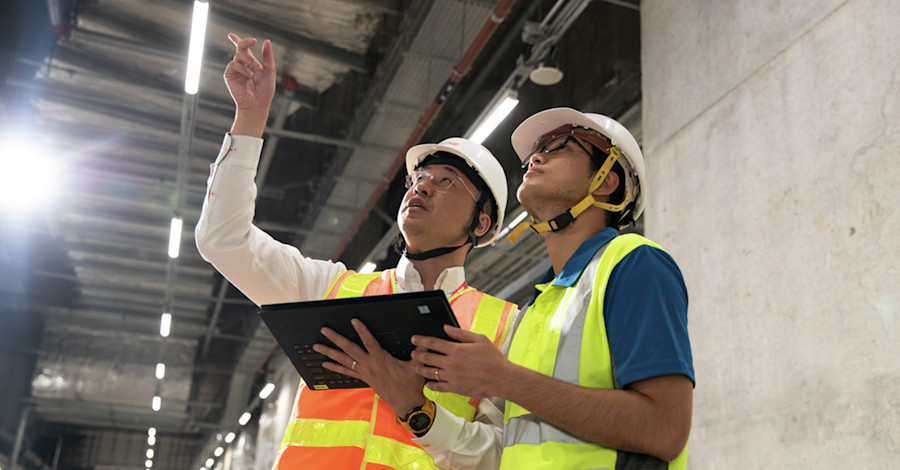
Many projects still rely on aerial lifts, boom platforms and other equipment that requires human operation. For these tasks, safety protocols need to be consistent, enforced and documented. Using large bots on sites also requires careful placement and attention to robotic arms that may move through the space and could injure workers.
Aerial lifts remain essential for electrical work, installation, cleanup and maintenance. When using them, OSHA requires a full pre-use inspection at the start of every shift. A pre-use inspection is the most critical thing you can do to enhance team safety when operating any equipment or automation system.
A comprehensive check includes a visual inspection for leaks and cracks, and a functional test of controls and emergency systems. Falls cause 38.4% of construction worker deaths, so lift readiness and worker safety are nonnegotiable in any risk-management plan. When lift access isn’t safe or structural conditions are unstable, drones and robots can serve as substitutes. When lifts are necessary, inspections ensure you’re not stepping into an even more hazardous situation.
Shaping a Safer Hybrid Workforce
Robots excel at the dangerous, repetitive and precision-heavy work that puts your teams at risk. You still guide quality, manage operations and make real-time decisions, while automation handles the tasks that pose the highest risk of injury. The future of construction is a hybrid model, where technology protects workers, improves productivity and reserves human skill for the tasks that truly require it.