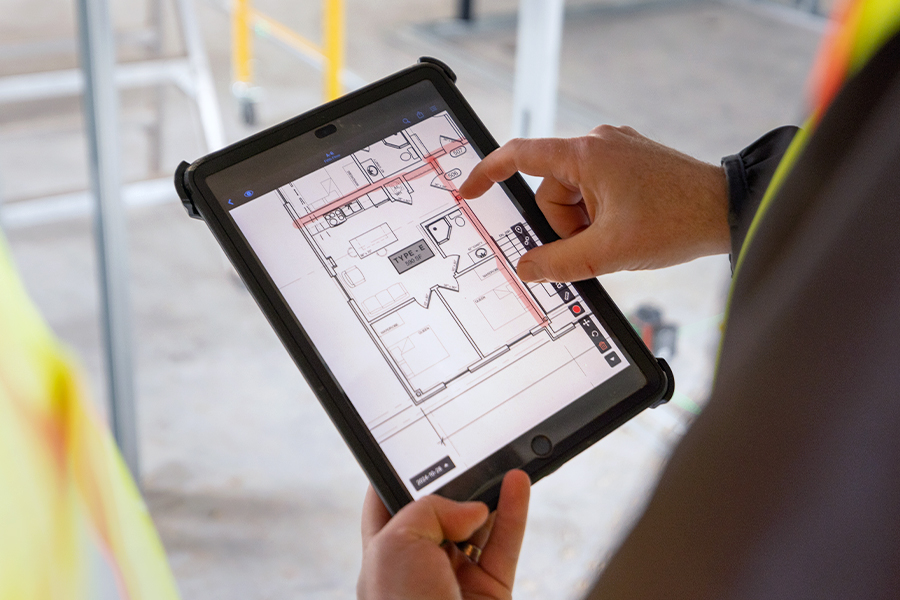
Solar installation documentation: Streamlining inspections and commissioning for renewable energy projects


Solar subcontractors face costly delays and inspection failures due to outdated documentation methods. Adopting digital tools and standardized workflows can streamline the process, reduce errors and ensure compliance. Embracing this technology is key to improving project outcomes, boosting profitability and securing a competitive edge.
Takeaways:
- Legacy documentation is a business risk.
- Digital workflows enforce best practices and create traceability.
- Centralized data storage is key for efficiency and compliance.
- Digital documentation is a competitive advantage, not a luxury.
As renewable energy continues to evolve, the role of comprehensive solar installation documentation cannot be overstated — particularly when you are responsible for inspections and solar project commissioning. Well-organized documentation affects everything from quality control and compliance to project schedules and warranty validation. Learn how digital solutions can transform your workflows, reduce errors and ultimately improve project outcomes.
How solar documentation is changing
Solar installations have grown in scale and complexity. Utility-scale projects can span hundreds of acres with dozens of inverters, trackers and integrated systems. Commercial and residential projects each present their own documentation challenges and regulatory requirements.
It’s clear, therefore, that regardless of scale, the documentation burden has expanded significantly. Owners and financiers now demand traceable, auditable records that include photos, timestamps, test results, serial numbers and compliance certificates. Traditional paper forms and isolated digital files are no longer sufficient.
However, according to a 2025 survey, digital adoption is slow. Although exclusively paper-based documentation is now fading, only 28% of installers are leveraging specialized software to streamline data collection and field operations. This is despite the same survey revealing inconsistent data collection, with 60% of respondents reporting needing extra truck rolls to collect missing photos.
Installers not keeping pace with solar installation documentation risk losing operational efficiency as well as failing compliance and financial assurance tests.

Why documentation matters — beyond compliance
Solar project commissioning documentation serves multiple stakeholders:
- Owners and investors rely on it to validate expected performance and financial returns.
- Operations and maintenance teams use it as a baseline for future maintenance and performance benchmarking. This is especially important for solar subcontractor management.
- Regulators and authorities having jurisdiction (AHJs) depend on thorough records to confirm compliance with safety and electrical codes.
Failing to capture complete records can lead to disputes, failed inspections, increased operational costs and the invalidation of warranties.
According to the Institute for Building Technology and Safety, 38% of projects show wire management failures on inspection. Improper labeling, degraded enclosures and poor conductor identification also feature heavily in common failings that compromise safety, longevity and performance. In large installations, this can translate to tens of thousands of dollars in lost revenue.
Robust documentation and standardized workflows are designed to eliminate exactly these kinds of issues.
Common pain points with traditional documentation methods
Manual, inconsistent, or error-prone legacy documentation processes have several key issues:
- Subjective quality control: Documentation depends on individual field personnel’s judgment rather than standardized criteria.
- Time-consuming manual entry: This delays reporting and obscures real-time visibility into inspection outcomes.
- Fragmented storage: Checklists, photos, test results and compliance certificates are stored in disparate formats or systems, making retrieval difficult during inspections or audits.
The result is often inconsistent inspection results, higher rates of on-site issues, and delays during final commissioning and permission-to-operate stages.

How digital documentation transforms inspection and commissioning workflows
The adoption of renewable energy inspection software and digital management platforms is no longer just a convenience. It is fast becoming a competitive necessity. Solutions like Fieldwire help standardize and automate documentation workflows. This yields a number of benefits, such as:
Standardized inspection checklists
Digital platforms enable the use of custom, standardized checklists that ensure every inspection criterion is evaluated consistently and objectively. Preloaded templates accelerate quality assurance and ensure nothing is overlooked during the digital commissioning process.
Real-time data capture
With mobile inspection tools, you can capture photos, notes, test values and compliance certificates directly in the field. This eliminates redundant data entry, minimizes transcription errors and ensures that documentation is accurate and complete.
Issue tracking and punch list management
Problems can be logged as tasks, assigned to specific people and tracked via live updates. This improves accountability and directly links nonconformances to resolution workflows.
Centralized repository
All documents — including checklists, photos, issue logs and test results — are stored in a centralized, cloud-accessible repository, simplifying retrieval for stakeholders and inspectors.
Automated reports and compliance packages
Many digital solutions automatically generate standardized reports suitable for submission to AHJs or utility providers. This drastically reduces the time between inspection completion and solar project commissioning approvals.
This integrated documentation approach, supported by a platform such as Fieldwire, can reduce administrative overhead while improving accountability and traceability across the project team.
Documentation in new construction vs. renovation contexts
Documentation needs differ when adding solar to a greenfield project versus retrofitting an existing structure.
New construction projects
These typically involve well-defined plans with updated-as-built drawings and Mechanical, Electrical, Plumbing and Fire Protection (MEP-FP) systems designed to integrate solar from the outset. Documentation can be synthesized into the project’s broader digital record framework. Creating this comprehensive digital trail is a key value-add, especially as industry sources predict a further increase in demand for energy-efficient homes.
Renovation or retrofit projects
Integrating solar into existing buildings requires detailed solar installation documentation to demonstrate how a building transitions from an energy consumer to a potential producer. In these cases, the first steps for renewable energy integration specialists are feasibility studies and systems sizing, along with cost-benefit analysis. Baseline conditions of MEP-FP systems must be captured to ensure that solar interconnection does not negatively impact them.
In both scenarios, automated document management can help you maintain clarity and consistency across multidisciplinary handoffs.

Actionable steps to improve your documentation processes
To elevate your inspection and commissioning workflows, consider the following best practices:
- Adopt standardized digital templates: Use checklists that reflect commissioning requirements and industry standards.
- Capture high-quality evidence in the field: Include timestamped photos and detailed notes for each inspection item.
- Centralize documentation: Use a cloud-based repository for real-time collaboration and version control.
- Integrate workflows across stakeholders: Ensure inspectors, field crews and commissioning agents are all working from the same documented workflows.
Specialist construction field management software, such as Fieldwire, can do all of this for you, streamlining inspections and, in some industries, closing out projects up to 33% faster while reducing rework.
Future-proofing your solar installation documentation
As the industry becomes more complex, outdated documentation methods are a significant business risk. Adopting digital documentation is an investment in efficiency, accuracy and reliability. By leaning into paperless solutions, you can improve your own profitability and workflow, as well as cement your role as an expert partner in the broader renewable energy transition.