
How construction risk management software helps field teams document and reduce jobsite hazards
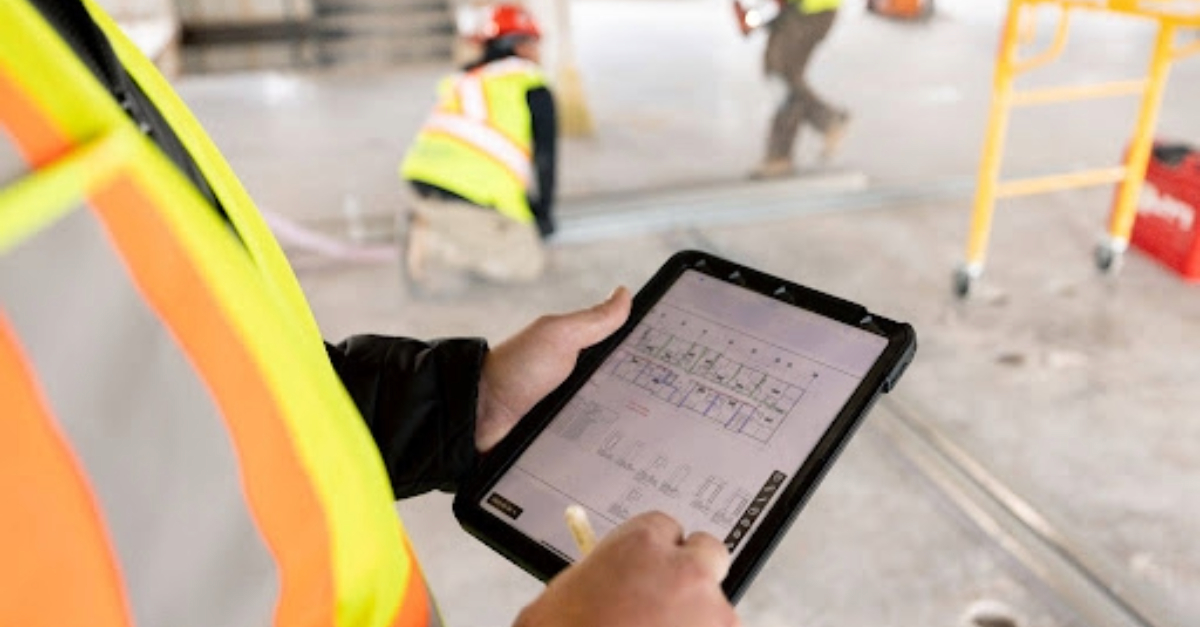
A superintendent walks the second floor of a commercial build and spots a gap in the railing near an open shaft. A laborer had flagged the same gap verbally two days ago, but nobody logged it, nobody assigned a fix, and now the crew is working around it like it's part of the plan.
Construction risk management software turns verbal flags into tracked corrective actions, giving field teams visibility into open hazards and building timestamped records that support closeout and dispute documentation.
This article breaks down what that software covers, the four categories of field risk it addresses, what to look for when evaluating software, and how field-first software like Fieldwire helps teams build organized records without adding hours of after-work paperwork.
What this article covers:
- Construction risk management software sits upstream of environmental, health, and safety (EHS), insurance, and claims tools, capturing the field records that feed them.
- Field teams manage safety, quality, schedule, and documentation risk simultaneously, and software has to capture all four.
- Offline mobile capture, plan-anchored records, timestamped evidence, real-time visibility, and audit-ready exports separate usable tools from shelfware.
- Field-first software helps teams flag hazards as they happen, assign corrective actions, and close the loop before issues become disputes.
- Fieldwire supports inspections, JHAs, daily reports, plan markups, and RFI/change order trails as the jobsite management layer for risk documentation.
- Dedicated EHS, Certificate of Insurance (COI), and claims platforms are still needed for OSHA recordkeeping, insurance administration, and enterprise analytics.
- Consistent daily documentation is what protects your team at closeout, during audits, and in disputes.
What construction risk management software covers
Construction risk management software captures and organizes the documentation, observations, and workflows that protect field teams across an entire project.Construction risk management addresses a broad range of risks, including those related to safety and labor, environmental impacts, legal and contractual obligations, and financial performance. Field teams spend most of their day on safety and documentation, and the records they capture there feed the rest of the project's workflows.
How it differs from dedicated EHS, insurance, and claims tools
Field-first jobsite management software and dedicated office-centered or specialist systems serve different purposes. Dedicated EHS tools handle safety recordkeeping, training certification tracking, audit readiness, and regulatory workflows. Insurance platforms manage certificate of insurance (COI) verification and policy administration. Claims management systems process incidents after they've already happened.
Construction risk management software operates upstream from all three. Jobsite management software is commonly used to help identify, track, and mitigate project risks.. Risk management features are often already built into the software that field teams use for daily work tracking on the jobsite. These tools are not only limited to standalone specialist or office-centered systems.

Hazards, incidents, documentation, and dispute trails
Common processes like pre-task hazard identification through job hazard analyses (JHAs) and pre-task plans (PTPs), incident and near-miss logging, daily work reports, photo evidence tied to locations on plans, request for information (RFI) trails, change order records, and inspection documentation serve more than one purpose. They help teams catch and correct issues in real time. They also create a timestamped, searchable trail that supports contractors during closeout, audits, and disputes.
The types of risk construction teams actually manage in the field
Project teams on active commercial jobsites manage four categories of risk. These are the baseline operating conditions a superintendent handles before lunch. Software that captures observations across all four categories turns daily fieldwork into a documented project record.
Safety and hazard risk
A superintendent overseeing framing, concrete, and mechanical/electrical/plumbing (MEP) scopes is managing simultaneous exposure across multiple high-hazard categories. Inexperienced labor compounds hazard exposure across every trade on site, which makes fast, clear field documentation even more important.
Quality and rework risk
Undocumented quality control deficiencies become rework orders the following week and margin hits during closeout. Serious quality control issues often lead directly to costly rework, especially when information is poorly documented or miscommunicated in the field.
Schedule and coordination risk
Response time on documentation directly determines whether a simple question becomes a significant delay. Delayed responses to RFIs can trigger schedule impacts and downstream change orders.
Documentation and dispute risk
Daily reports treated as routine paperwork can become important project records when disputes arise regarding delays, labor shortages, or site conditions. Teams need records that capture the who, what, when, where, and why of the day so that information is readily available and searchable when those disputes arise.
What to look for in a construction risk management tool
The right software has to work where the work happens: on active jobsites, in basements with no signal, and under time pressure that doesn't leave room for a learning curve. Five key features tend to determine whether a tool actually gets used in the field.
Mobile capture that works offline and on the jobsite
The standard is full functionality offline, including forms, photo capture, checklists, and signatures, with sync when connectivity returns.
Plan-anchored documentation tied to a specific location
A photo pinned to the exact location on a drawing and linked to a task with an assigned owner creates clear documentation. Location-tied records answer the "where?" that becomes critical when questions arise over what work was done, what condition existed, and when it was observed.
Photo, markup, and timestamp evidence on every record
System-generated timestamps strengthen the reliability of project records compared to handwritten dates on paper logs. The software should capture and preserve precise timestamps natively, not strip them during upload or compression.
Real-time visibility from field to office
Safety directors and project executives managing multiple active jobsites need a centralized view of which sites have open hazards, overdue corrective actions, or compliance gaps.
An audit-ready record that holds up at closeout and in disputes
Records need to be exportable, organized, and credible to outsiders who weren't on the jobsite like claims consultants, attorneys, OSHA inspectors, and owner's representatives. Timely collection and organization of digital records matters when disputes and litigation arise.
How field-first software reduces risk on active jobsites
These capabilities matter most when they support the pace of real field work. The value comes from helping teams capture, assign, and close issues while the job is still moving, well before those issues turn into rework, delays, or disputes.
Spot hazards and issues the moment they happen
When a crew member identifies a loose guardrail, an unprotected opening, or material that doesn't match the spec, the documentation needs to happen right then, not at the end of the shift when details are fuzzy and the photo opportunity is gone. Mobile apps that let workers log observations with photos directly from the field, even without connectivity, capture conditions as they exist. Prompted hazard checklists also help less experienced workers identify issues that a paper-based approach would leave to memory.
Track corrective actions to closure with assigned ownership
Corrective action depends on clear ownership, due dates, and closure visibility. When a reported issue gets assigned to a specific person with a due date and the system sends a notification, the corrective action has accountability built in. Without that loop, documented hazards can stay open indefinitely, leaving a paper trail that shows issues were identified but never formally closed.. Strong documentation is specific, timely, and followed through to closure.
Build an indisputable record for closeout, claims, and disputes
Success in disputes often depends on who has the better records. Daily reports are strongest when they are created contemporaneously with the work completed each day. Field-first software builds that timing into the everyday workflow, so the documentation happens naturally as part of the work itself.
How Fieldwire helps field teams document and reduce risk
Fieldwire is a mobile-first, field-first jobsite management app built for the people doing actual work in the field. For risk documentation specifically, it functions as the jobsite management layer where hazards, observations, inspections, and project records get captured in real time.
Digital forms for inspections, JHAs, and daily reports
Fieldwire offers digital forms for daily reports, safety audits, QA/QC inspection checklists, timesheets, and time-and-materials records. These forms are timestamped, cataloged in one central location, and searchable if compliance questions arise later. For daily reports, the app captures weather, workforce counts, work performed, equipment, safety incidents, delays, and photos taken from a phone or tablet.
These workflows help teams move toward more consistent digital documentation and reduce reliance on paper-based reporting.
Plan markups and photo evidence tied to every issue
Crews attach photos and annotations to specific points on plans, timestamp them, and link them to a task's location. Team members can create markups, including private markups shown in purple that are visible only to their author. The result is a l, timestamped record organized by location, trade, assignee, and status. Offline functionality means this works anywhere from basements to steel-framed structures with no signal, with data syncing back when connectivity returns.
When schedule or scope questions arise, teams can pull up photo documentation and task history to show what happened, where it happened, and when it was recorded. That can be the difference between an iron clad record of the topic and a he-said-she-said argument.

RFIs, submittals, and change orders that create a defensible paper trail
Fieldwire's RFIs, submittals, and change orders track changes, notes, attachments, and timestamps in an Activity tab. When a change order needs justification, teams can use timestamped daily reports, task histories, and related documentation to show a chronological account of relevant work.
Stored site observations, task histories, and plan-based documentation help teams justify changes, answer schedule questions, and organize large volumes of records in one place.
What Fieldwire isn't (and what you'll need alongside it)
Fieldwire is a field-first jobsite management platform, not a dedicated EHS compliance platform, insurance administration system, or claims processing tool. Some functions that require purpose-built tools include OSHA 300/300A/301 recordkeeping and electronic submission, ISO 45001 audit workflows, COI verification with fraud detection, safety training certification tracking with expiration alerts, and enterprise-level claims analytics. If your company needs to manage any of these processes, you'll need dedicated tools to handle them.
A complete construction risk management strategy requires integrating planning across all business lines and project phases, addressing risks from project through enterprise level. That goes far beyond what any single field tool provides. Knowing where Fieldwire fits in the stack, and where it doesn't, helps you build the right combination for your operation.
Build the documentation trail your team needs, without the after-hours paperwork
Every daily report, every inspection photo pinned to a plan, every RFI with a clear response trail adds to a record that protects your team at closeout, during audits, and in disputes. Fieldwire gives field teams and office staff a shared, real-time view of plans, tasks, and documentation from any device, with over 4,000,000 projects powered globally.
Frequently asked questions about construction risk management software
They overlap but aren't the same. Safety management software focuses on hazard identification, incident tracking, OSHA compliance, and training certification. Construction risk management software spans a broader scope that can include safety, quality, contracts, documentation, and dispute prevention. Many field teams use a field-first jobsite management tool like Fieldwire for daily risk documentation and pair it with a dedicated EHS platform for regulatory compliance workflows.
Strong records include daily reports, change orders with written scope and cost documentation, and RFI logs showing who asked what and when. They also include timestamped photographs with preserved metadata, baseline and updated project schedules, and payment records such as invoices and pay applications. Digital records are only as strong as the metadata they preserve.
A field management tool generates the location-tied records that feed risk management: daily logs, inspection records, photo evidence, and RFI and change order trails. It does not replace dedicated platforms for OSHA recordkeeping, insurance certificate verification, claims processing, or enterprise risk analytics. Build a stack where your strong records and your dedicated platforms handle the compliance, insurance, and analytics layers above it.


