
Construction technology in 2026: what's changed and what matters
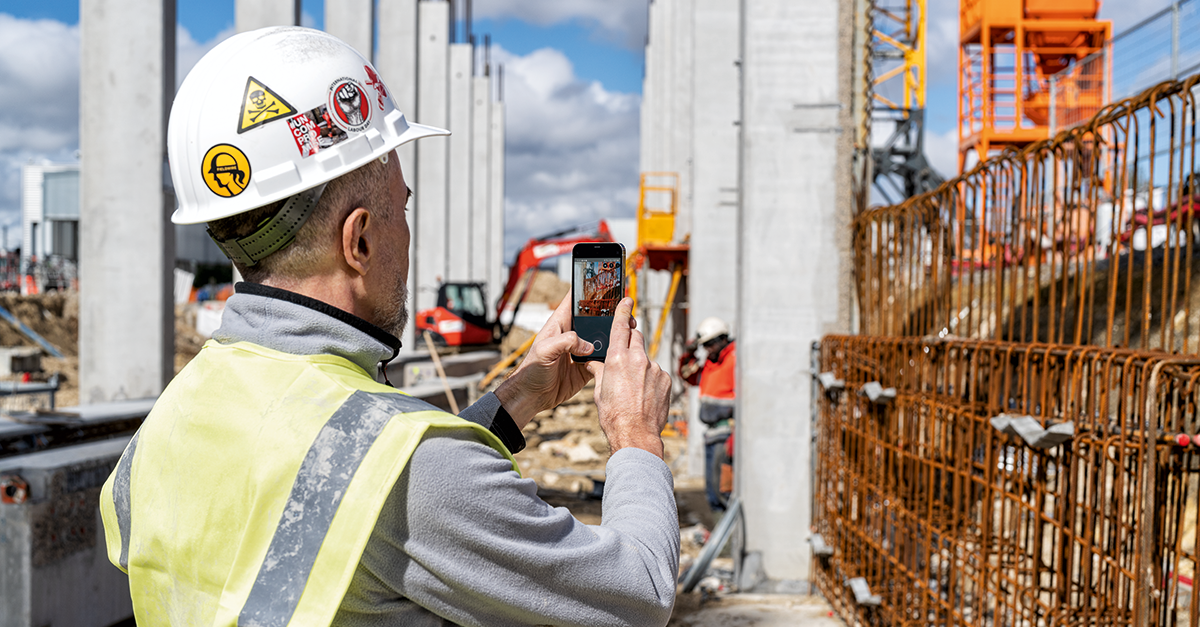
The superintendent gets the demo, and the AI platform reads drawings and flags clashes. It drafts daily reports on its own, then ownership signs off. Six weeks later, the field crew is back to a group text and a stack of paper plans in the gang box, because nobody on the third floor could figure out how to make the construction technology work with gloves on and no signal.
When field crews can use a tool every day, the payoff goes well beyond subscription ROI. When field crews capture updates as work happens, AI gets current inputs. BIM models stay closer to what's actually built, and teams get earlier visibility into rework triggers. Direct field rework remains one of the clearest places where cleaner field data can improve project execution.
In 2026, construction technology decisions should start with whether field crews can use the tool every day. The contractors pulling ahead are the ones who solved field adoption before they bought the next shiny thing.
What this article covers:
- AI, BIM, robotics, and modular gains depend on jobsite readiness, not hype.
- Labor constraints make easy field adoption the bottleneck for usable construction data.
- Offline mobile workflows keep plans, tasks, photos, and markups moving when jobsites lose signal.
- Integrated platforms only work when clean field data flows into the wider stack.
- Contractors benefit when adoption becomes a repeatable operating discipline across projects.
- Rollout success shows up when crews keep using the platform after the first weeks.
What's actually changed in construction technology heading into 2026
Almost every headline construction technology trend moved faster in marketing than it did in the field in 2025. Technology readiness got stress-tested last year and showed where ambition had outpaced field capacity.
AI, BIM, and digital twins
AI awareness is nearly universal, but actual workflow integration is still early. The AI workflow adoption gap is stark: 87% of contractors expect AI to change the industry, yet only 19% have adapted their workflows to use it. The appetite is clear. Day-to-day workflow change still has to catch up.
BIM remains the industry's foundational digital tool, but adoption has long lagged well behind awareness, even decades after BIM first entered mainstream use, and plenty of firms still use it narrowly. Digital twins get similar treatment, with value easier to see than adoption plans.

Robotics, drones, and reality capture
Construction has moved faster on reality capture than on task-execution robotics. Robotics adoption remains uneven, with only 55% of construction companies using robotics compared to 84% of automotive firms and 79% of manufacturing firms, and deployment actually declined year over year in BuiltWorlds' most recent benchmarking report. The repeatable uses include 360 walks and drone imagery for site capture across active projects.
Robotics is further behind on the task-execution side. Investment has favored heavy-equipment autonomy and reality capture over installation and task-execution robots, which suggests where the technology is genuinely ready versus where it's still early.
Modular and offsite construction
Modular construction keeps growing on the back of speed and labor availability. Shop fabricated modules arriving pre-fitted with electrical and plumbing can reduce onsite labor demands. Speed to market is a main driver, but schedule certainty and labor availability are more primary drivers than speed.
Every one of these trends still runs on the same input: field data.
The trend most 2026 coverage undersells: field-level adoption
Every advanced system on top of the stack runs on data the field generates, so field crew adoption is what decides which 2026 technology investments actually produce usable project data.
Why the labor shortage makes adoption the real bottleneck
You have fewer, less experienced people to do the same amount of work, and that's not changing soon. The industry still needs a large number of new workers in 2026, mainly to cover retirements. Roughly 41% of the current workforce will retire by 2031. Contractors are also having trouble finding skilled labor, and staffing constraints can limit how much work they take on.
Now put that against how field time gets spent. Long-documented construction productivity research has repeatedly found that direct, hands-on work accounts for only a modest share of a craftsman's day, with the rest going to non-direct activity like hunting for information and reworking mistakes. When you have fewer people, you cannot afford to burn their hours on that. Software that requires classroom training, IT support, or a desktop in the trailer is a luxury the math no longer supports.
Why sophisticated tools depend on field use
The office buys the tool, the field ignores it, and the pattern is familiar. Buying teams often treat field crew needs as a priority, then choose software before they ask crews for feedback. The result is predictable: field crews revert to texts and notebooks within weeks.
AI models trained on incomplete or outdated field data produce unreliable output. BIM coordination also drifts from reality when nobody updates the model from the field, so prefabricated spools and assemblies may require field modification. That cuts into the prefab savings. Digital twins become "false twins" when as-built updates and unincorporated change orders are missing; they need accurate and reliable data about the real-world asset over its life cycle.
Fieldwire's own AI features, grouped under Field Intelligence, are built around that dependency: AI summaries that surface schedule slips and safety concerns, AI-assisted organization of information and plans, and recurring forms that can fill themselves from recent activity, all of which only work as well as the field data feeding them. On trust, which is part of adoption: customer data is never used to train AI without explicit permission.
What field-first, mobile-first actually means in practice
Field-first means the tool is designed for field crews doing the work. That sounds obvious, but many office-first tools were later retrofitted for the field. That creates the kind of jobsite friction that makes crews reject them. The real thing shows up in jobsite details.
Offline functionality for real jobsite conditions
If the app needs a signal to work, it often doesn't work in real jobsite conditions, because connectivity drops in basements, stairwells, or on remote jobsites. Fieldwire offers full offline functionality on iOS and Android: crews view plans, record markups, capture photos, and update tasks without a signal, then everything syncs automatically when the connection returns. That's the actual mechanism behind "field-first," and it's worth naming specifically rather than gesturing at "mobile-friendly."
No-training-required interfaces
If your foreman needs a training class to use the software, he'll go back to paper. Fieldwire is built so field crews pick it up quickly, with a mobile-first design and strong offline functionality for remote jobsites. Adoption is the outcome the product design targets.
Real-time sync between field and office
The field and the office should be looking at the same plans and task updates at the same time, so nobody has to reconcile two versions at the end of the week. When a crew marks up a drawing or closes a punch item on their phone, the office sees it instantly when connected, or as soon as the offline update syncs. That's how you reduce version confusion, a common path to rework, and how you keep everyone working from a single source of truth without manual handoffs.
Fieldwire is a mobile-first, field-first jobsite management platform built for the people doing the actual work, and it addresses exactly this problem: keeping plans, tasks, quality control, and documentation aligned across every device on the jobsite. Trade and specialty contractors face this problem daily on commercial electrical, mechanical, plumbing, drywall, civil, low voltage, solar, facade, carpentry, and other specialty scopes, and the same field-adoption pattern shows up anywhere teams need repeatable field workflows across many active jobsites. For self-performing GCs, the same need applies when crews handle concrete, demolition, carpentry, or other trades alongside subcontractor coordination. Managers can track daily work, relay tasks to crews, and keep accountability moving without being physically on every jobsite.
Why integrated platforms are the other real trend, and where field data fits in
An integrated stack is only as good as the field data flowing into it, which is why platform consolidation and clean field capture are really the same trend viewed from two ends. Singapore construction firms reduced their technology count from 7.3 to 6.5, described as consolidation to reduce data fragmentation. Construction software companies are also building a more integrated stack from preconstruction through execution.
Industry cloud platforms are becoming shared data backbones for project lifecycles. That can reduce disputes and give AI systems cleaner inputs, but only if what's flowing into that backbone is accurate to begin with.
Fieldwire connects with supported cloud storage tools, including SharePoint, Google Drive, Box, Dropbox, and OneDrive, so plans and field documents don't sit in a silo. Fieldwire's role in that stack is specific: it's the layer where field data gets captured cleanly, so everything built on top, cost systems, AI models, owner reporting, has something reliable to work with.

What separates contractors who benefit from these trends and those who don't
Contractors who benefit from these trends treat adoption as an operating discipline, not a one-time rollout decision: consult field crews before purchase, choose tools that match jobsite conditions, standardize workflows, and get real data out of the field consistently. Technology still needs strong leadership, and it exposes weak execution faster than it used to.
That's the correction the "buy more tools" mindset misses. Firms that buy before consulting the field often end up with unused platforms.
For trade and specialty contractors and self-performing GCs, the payoff of solving adoption first is sustaining that consistency across projects without piling on administrative overhead, tracking daily work, accountability, and progress the same way on every jobsite. That's a more durable advantage in 2026 than any single feature.
If you're trying to standardize how your crews work across every jobsite and get the field and office looking at the same information while keeping projects on schedule, that's the problem Fieldwire is built to solve. Fieldwire gives field crews and office staff a shared, real-time view of plans, tasks, and documentation, so everyone's working from the same page, whether they're on the third floor or in the trailer.
Start free to see how Fieldwire captures clean field data from day one.
Frequently asked questions about construction technology
Run the pilot in real jobsite conditions. A conference-room demo alone won't show whether crews can use the workflow. Have crews open plans, add markups, capture photos, update tasks, and close punch items from the field, including in areas with poor connectivity. If the workflow requires classroom training or a desktop in the trailer, fix that before rolling it across more projects.
Ask where information gets lost today: which plan updates are hard to find, where signal drops, which tasks or forms get duplicated in texts and notebooks, and which updates the office needs fastest. Those answers are the buying requirements. If the software does not match how crews actually work, the rollout will depend on willpower instead of habit.
Start with the data crews already generate every day: current plan markups, task status, photos, punch items, QA/QC notes, and forms. That gives the office a current view of what is happening on site and gives connected systems cleaner inputs before teams try to layer on more advanced automation.
Look for sustained use after the first few weeks. Crews should still be updating tasks and documentation from their phones, the office should see field changes without end-of-week reconciliation, and managers should spend less time chasing plan versions or physically relaying work between sites. If the crew has slipped back to group texts and paper, adoption has not stuck.
Use Fieldwire as the jobsite layer for plans, tasks, quality control, and documentation. In a pilot, test the offline iOS and Android workflow, real-time sync between field and office, and supported document connections with SharePoint, Google Drive, Box, Dropbox, and OneDrive. Use the pilot to prove clean field capture that the rest of the stack can trust.


