The 60-minute dividend: how saving one hour per worker per day transforms your bottom line

In construction, time is money, and every minute lost to inefficiency can shrink project margins. The "60-Minute Dividend" represents the accumulated financial windfall a crew secures by recovering one wasted hour per day. With these strategies, you and your crew can eliminate daily friction, streamline on-site communication and protect your hard-earned bottom line.
The current state of construction management
Operational stagnation affects modern construction management. Contractors estimate that on-site inefficiencies consume between 11% and 15% of all field labor costs, creating a financial drain across the industry. Delayed approvals, poor supply chain communication and paperwork drive this issue.
Productivity drops when workers spend hours hunting for materials or waiting for design answers instead of building. In an industry with smaller profit margins, these daily delays drive up overall project costs and can quickly reduce your earning potential. For contractors, capturing even a fraction of this wasted time can improve profitability.
Understanding time efficiency
Time efficiency in construction means getting the most out of every hour you work on a jobsite. Instead of rushing tasks, it focuses on cutting out time wasters, like waiting for materials or fixing communication mistakes.
Project teams track this through specific metrics. These include schedule variance, schedule performance index and cycle time. Some project teams are even shifting toward flexible project delivery to adapt quickly to changing material-allocation trends. In 2024, there was a 57% increase in hybrid approaches, which combine traditional approaches with Agile.
Focusing on these metrics keeps the workflow smooth and creates clear benefits for the project:
- Accurate schedules, allowing trades to take over when the next team finishes
- Fewer disagreements between subcontractors over who works where
- Fewer unexpected changes because teams can catch design mistakes early
Hitting daily goals keeps the job moving. Stopping small delays now prevents major disruptions later, keeping the project on track and protecting your profits.

The role of construction software
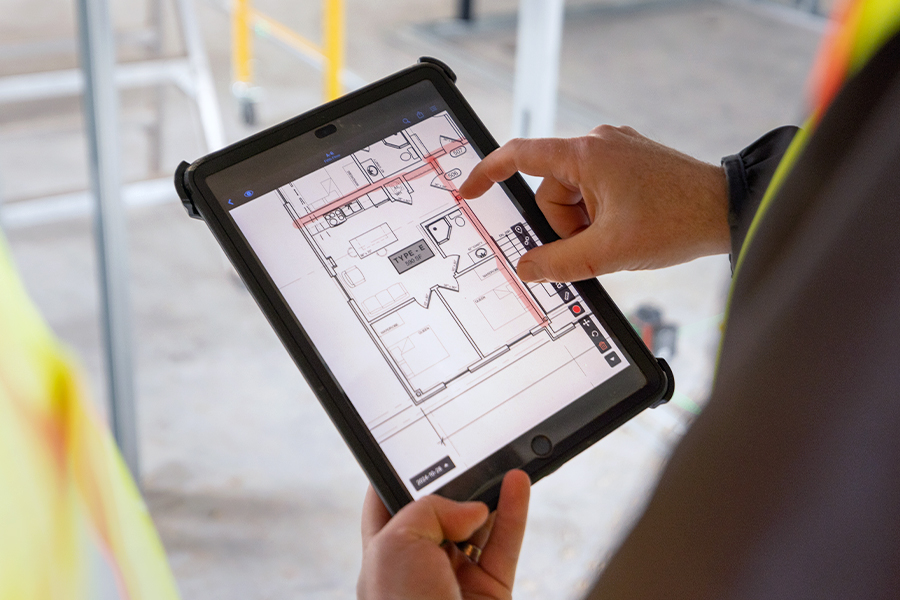
Modern construction software is the backbone of the jobsite, replacing slow paper processes with instant data sharing. Integrating cloud-based scheduling and tracking systems can quickly resolve field mishaps. In fact, teams using connected construction systems that allow for a uniform data environment reclaim up to 10.5 hours of wasted time each week.
Software tools do this by automating repetitive tasks, like invoicing, streamlining communication with real-time project updates and allowing for instant reporting.
Five software types drive these gains across the project life cycle:
- Construction document management software: This tool centralizes blueprints, contracts and specs in one cloud location. It saves time by ensuring field crews always build from the latest revisions, preventing costly rework.
- Construction compliance software: The application automatically tracks safety permits, licensing and environmental codes. It boosts productivity by preventing legal delays and keeping the jobsite fully operational.
- Construction quality control software: This platform standardizes punch lists and field inspections. It catches defects early, reducing the time you spend fixing installation errors before final handover.
- Construction project documentation software: The system records daily logs, weather conditions and site photos. The software eliminates administrative delays by giving managers instant visibility into field progress.
- Construction reporting software: It consolidates labor hours, material delivery dates and budget variances into a clear overview. The tool optimizes workflow by highlighting scheduling bottlenecks before they derail your timeline.
There are some tools that combine all of these features. Finding the right tool requires leaders to communicate with stakeholders about how the technology will help the business.
See how digital jobsite management helps teams recover lost time and stay on schedule. Learn about Fieldwire.
Practical strategies to save one hour per worker
While construction software improves productivity metrics across your operations, targeted workflow adjustments also deliver significant time savings. Combining software tools with disciplined habits can transform daily performance and recover lost labor hours.
Utilizing mobile applications
Field apps eliminate the constant back-and-forth between the jobsite trailer and the active workspace. Crews can instantly access blueprints, submit information requests and log change orders right from their mobile devices. This immediate access prevents communication delays, allowing field teams to spend more time on work tasks.
Training workers on new technologies
Introducing advanced tools can only deliver results when the entire workforce knows how to use them safely and effectively. Structured training programs bridge this technical gap. In fact, according to a subject matter expert, CICB’s Texas Operations Manager, John O’Connor, “When contractors invest just 1% of their labor budget in targeted training, jobsites experience an 11% improvement in overall labor productivity.”
Daily stand-up meetings
A brief ten-minute morning huddle can keep every subcontractor aligned and prevent costly mid-day scheduling conflicts. Field supervisors will outline daily tasks and address safety hazards before work begins. This communication removes misunderstandings, allowing workers to move straight to their assigned tasks without waiting for supervisor direction.
Effective scheduling techniques
Using the Critical Path Method enables project managers to identify the longest sequence of dependent tasks you need to complete a project. Coupled with AI tools, this technique highlights which tasks to finish on time to prevent delays. Rolling out these techniques requires that employees are open to AI adoption.
Feedback mechanisms
Establishing straightforward digital channels for worker feedback captures information directly from the field. Laborers and operators can identify safety hazards and tool shortages that may disrupt work. Addressing these front-line observations can prevent systemic delays and create a smoother workflow across all trades.
Resource allocation
Staging materials right next to the active work zone reduces unnecessary handling and excessive foot traffic. Project managers optimize efficiency by coordinating delivery schedules with daily installation limits, preventing material bottlenecks and keeping pathways clear. This approach saves time finding supplies.
Regular performance reviews
When you track historical labor data against baseline production targets, operational inefficiencies become clearer. Evaluation metrics, like revenue per employee and project completion rates, reveal which activities cause recurring schedule overruns. Reviewing these trends weekly keeps field processes operating effectively.

Measuring the impact of time saved
To calculate the baseline value of time saved, multiply one saved hour per day by your total headcount and average hourly labor rate. Over a multi-month project, this math could reveal thousands of dollars in reclaimed capital. You may want to invest these funds into other projects.
For example, commercial projects rely on outside investors, demanding predictable timelines and strict budget enforcement. Saving an hour daily puts time back into schedules and enhances investor returns. Companies can then reinvest this revenue into advanced equipment or business expansion.
Protecting your labor hours creates permanent advantages for your bottom line. Consistently meeting deadlines expands your bidding capacity, enabling you to take on larger contracts without increasing overhead. This can secure long-term business growth.
Save hours per employee each week
Recovering one hour per worker each day can protect project margins and build business equity. Combining modern construction software with disciplined field habits can eliminate delays and stabilize project delivery. Adopting these digital tools keeps your company competitive as construction management technology continues to advance.