
Data center construction management: How to handle 10,000 open tasks
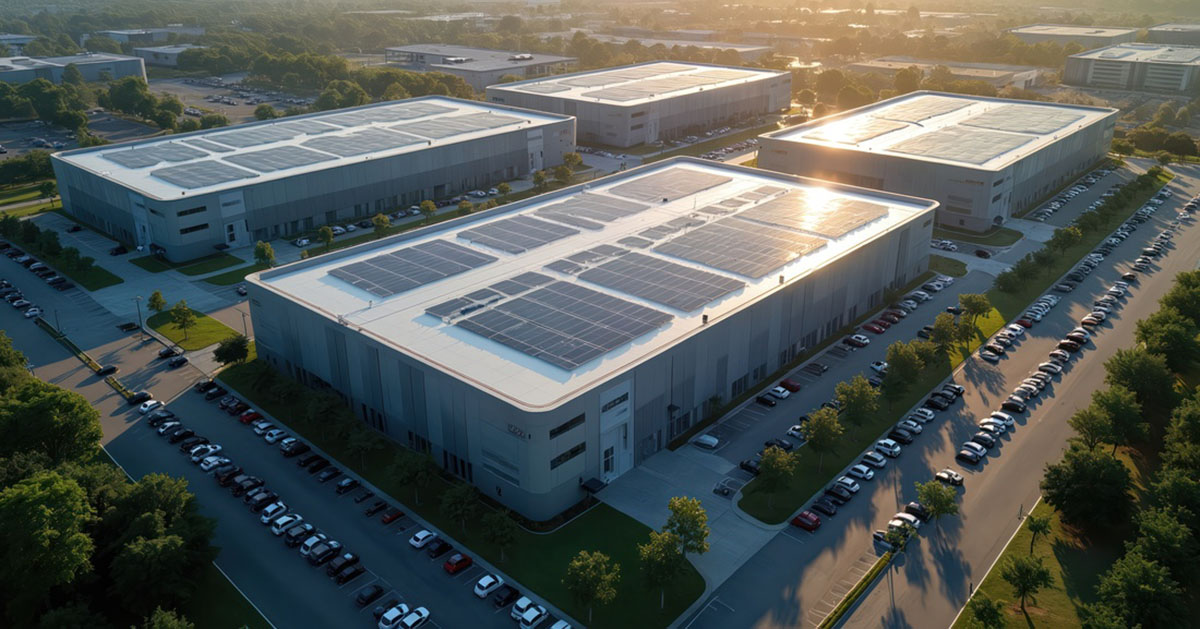
Mechanical and electrical systems alone account for roughly three-quarters of total construction cost on a typical data center, according to Turner & Townsend's 2025 data center construction cost index, which breaks a US air-cooled build at 22% mechanical and 54% electrical of total cost. Every one of those systems generates its own installation checkpoints, tests, and punch items, which is how a single data center build ends up with task counts in the tens of thousands.
The mechanical foreman opens the shared task list at 6 AM and starts scrolling past electrical terminations, controls points, and fire protection items. He is looking for the 40 tasks that actually belong to his crew today. Every minute he spends sorting through other trades' work is a minute his crew waits, and on projects with daily liquidated damages, those minutes add up fast.
At that scale, the question isn't whether you'll have 10,000 open tasks. You will. The question is whether your superintendent can find the 40 that matter for the next hour, and whether your verification process survives the volume once closeout pressure peaks. That's what the rest of this piece covers: why the count climbs this high in the first place, how filtered views turn one shared task list into the right view for each crew, and how a rolling punch list with independent verification keeps closeout defensible instead of just fast.
What this article covers:
- Spreadsheets and paper punch lists get difficult to manage once ownership, deadlines, and commissioning updates need to stay live across dozens of trades.
- Trade, location, and status filters turn one shared 10,000-task list into the right view for each crew.
- Dense MEP scope, stacked trades on a compressed timeline, and layered commissioning checkpoints are why the task count climbs this high.
- A rolling punch list and independent verification protect closeout evidence even under heavy schedule pressure.
- Fieldwire keeps plan-pinned tasks, automated reports, offline updates, and verification records connected as the count climbs into the tens of thousands.
Why data center task volume breaks a spreadsheet or a single punch list
A punch list with 50 items is manageable on paper. A punch list with 500 items across 12 trades and four floors needs a live workflow, and a data center build multiplies that by another order of magnitude. Spreadsheets and paper lists become difficult to manage at this scale in specific, predictable ways.
At this scale, PMs chase status through texts, emails, field notebooks, and subcontractor lists; subcontractors keep their own versions, and the person assigned to an item may not even know they own it. Ownership gets blurry, since paper and spreadsheet punch lists typically lack a built-in mechanism to notify a trade when items are assigned, a timestamped acknowledgment, or deadline alerts when deadlines pass, unless a team builds that capability in separately.
When items are tracked across multiple emails, spreadsheets, or notepads, issues get duplicated or missed. Commissioning dashboards can go stale when critical details stay trapped in files the field never opens.
Unresolved punch items can tie up budget that would otherwise go to progressing work, and fixing an item after trades demobilize takes more coordination than catching it during construction. Commissioning tracking makes the spreadsheet problem worse, since a dashboard built on a file becomes updated the moment that file changes.
Filtered views by trade, location, and status on the same task set
A 10,000-item task list has to show what belongs to a crew in its area each day. That requires filters working on one shared task set.
- Trade filtering does the heaviest lifting. When every task carries a trade category, a plumbing or mechanical foreman filters to his scope and plan-view filters can gray out non-matching items. He sees what's on his plate, where it is, and when it's due, without touching the other 9,000 items.
- Location filtering works because tasks pin to exact spots on the drawings, so crews can work from the plan view.
- Status filtering separates what's open, what's claimed complete, and what's verified, which matters enormously during commissioning.
Together, those filters turn one shared task set into the right view for each crew.
The same data also supports big-picture planning through different lenses. Fieldwire, a mobile-first jobsite management app built for the people doing the work in the field, handles this with task views across kanban, calendar, list, and Gantt views on one task set: the superintendent watches bottlenecks form as tasks stack up in a status column, the foreman dispatches crews from the calendar, and the project engineer runs closeout from the list view. That shared source is designed to reduce duplicate entry across those views.
Some other data center construction software tackles task volume through AI-driven sequence generation and dependency mapping at the preconstruction and project-controls level, though the specific capabilities vary by platform. That approach helps the scheduler in the trailer. The foreman still needs a fast way to isolate his 40 tasks for the next four hours from a 10,000-task shared list. Filtered, plan-pinned views solve exactly that.

Why the count gets so high: parallel trades, one shared timeline
Data center task counts explode because the building is mostly systems, and the systems all go in at once. MEP scope is a large share of many data center construction budgets, with large portions of floor area dedicated to mechanical and electrical equipment and support spaces. More systems means more terminations, more tests, more checklists, more punch items.
Then the schedule compresses everything. Data center builds are commonly scheduled on faster timelines than many other commercial sectors, so trades stack instead of sequencing. A large campus can run dozens of trades across electrical, mechanical, controls, fire, low voltage cabling, concrete, structural, and specialty MEP in tight field sequencing. Each trade generates its own task stream, and every stream lands on the same shared timeline.
Commissioning multiplies it again. Data center commissioning typically moves from factory testing through integrated systems testing to closeout, and each level generates its own checklist and punch list that must close before the next level opens.
At early installation levels, observations need to enter the punch list and close before startup and testing can proceed. Point-to-point verification means every control point, sensor, and connection is individually verified and documented. A data center project carries several simultaneously active punch lists across overlapping scopes.
Keeping verification intact when the volume is high
High task volume puts extra pressure on verification. On mission-critical work, verification discipline supports operational reliability after handover. On operational data centers, downtime is measured minute by minute. Documented checks help teams catch human error, missed procedures, and process flaws before handover. A punch item closed without retest evidence leaves less support for that procedure.
Commissioning records need more than a closed status: every resolved item needs documented proof, which doubles the administrative weight of each task at the exact moment schedule pressure peaks. Two practices distribute that administrative work across the project.
- First, run a rolling punch. It is the most common approach toward achieving the ultimate zero-punch list goal. Documenting deficiencies as they arise keeps the closeout list small and keeps trades on site while fixes are cheap.
- Second, separate who closes from who verifies. In a two-step workflow, the trade marks the item complete and a second party, the GC's quality lead, the architect, or the owner's rep, independently verifies it with photo proof before it counts.
Fieldwire's punch list app supports two-step punch list verification, so completion and final verification can be separated, and every verification can carry a documented record. At 10,000 tasks, that structural separation helps teams keep closeout moving while preserving verification.

How Fieldwire handles high-volume task management on data center builds
Fieldwire resolves the volume problem in the field, where the tasks actually get worked. Tasks pin directly to sheets at exact drawing locations, each carrying an assignee, due date, priority, status, photos, and checklists. When plans are revised, Fieldwire automatically versions sheets and helps keep tasks linked to the current drawing, reducing the odds of chasing a punch item pinned to a dead revision.
Filtering by trade grays out unrelated tasks on the plan, so the foreman can focus on his scope.
Automated reports pull filtered summaries of open tasks by trade, status, or location and email them to the team daily or weekly. Once scheduled, automated punch list reports deliver recurring trade updates without somebody manually managing the process.
TekWorks, a San Diego data center installation contractor, managed 400 projects in one year with every punch item tracked in Fieldwire's task system, complete with timestamps and a full chronological record of every update. Graham tracked 15,000 punch items on the $285M Jim Pattison Children's Hospital, a mission-critical volume analogue rather than a data center itself, and saved $35,000 in printing costs doing it. Because Fieldwire's core features work offline and sync when connectivity returns, crews inside a shell building with no signal can generally keep documenting without interruption.
Field teams tend to adopt it quickly, which matters when more than 40 trades rotate through a site. Fieldwire reports powering more than 4,000,000 projects worldwide. Fieldwire reports that teams save up to one hour per person per day on the jobsite.
Ten thousand open tasks on a data center build are the normal output of dense MEP scope plus stacked trade and commissioning schedules. Trade and status filters on plan-pinned tasks, paired with two-step verification, keep the volume workable and the closeout defensible. Fieldwire gives field crews and the office one shared, real-time view of plan sheets with tasks and as-builts, so the superintendent can quickly narrow down to the right 50 tasks and the sign-off step is built to not get skipped.
Frequently asked questions about data center construction management
The biggest backlogs usually come from MEP installation checkpoints, electrical terminations, controls points, fire protection items, test records, and commissioning punch items, because each one has to be assigned, located, checked, and verified before closeout.
Common data center commissioning frameworks run through levels such as Level 0 (design and planning), Level 1 (factory acceptance testing), Level 2 (delivery, installation, and pre-startup), Level 3 (system start-up), Level 4 (functional performance testing), Level 5 (integrated systems testing), and Level 6 (closeout and handover). Each level generates its own checklists and punch items, and open items generally must close before the next level begins.
The trade can mark the work complete, but final closure should sit with a GC quality lead, architect, or owner's rep who checks the fix, attaches photo proof, and leaves a timestamped verification record.
Move beyond a spreadsheet when the list needs live assignees, deadline alerts, drawing pins, status filters, timestamps, or verification evidence that multiple trades and reviewers can trust at the same time.
Start as soon as deficiencies appear, then use daily or weekly filtered reports to keep trades fixing items while they are still onsite and prevent the closeout list from piling up.


