
Renewable energy construction: field coordination for solar and wind

Renewable energy construction runs on distance, and that's the first thing that breaks in the field. The electrical crew at the far edge of a 500-acre solar farm finds a combiner box wired to the wrong string layout. The box is a mile from the substation, in a zone a different sub finished two weeks ago, and the corrected drawing is sitting in a project manager's inbox back at the trailer where there's actually cell service. On a commercial build, someone walks down a hallway and fixes it. Here, resolution can take phone calls, a truck ride, and several hours before the crew has the drawing they need.
That distance is what makes renewable energy construction different from every other build type, and it's why field coordination can break down in ways a commercial superintendent wouldn't recognize. On a solar or wind site, a documentation gap can be miles from where it's discovered, in a location with no connectivity, on a project team spread across hundreds of acres. Missing or inconsistent documentation at handoff can trigger early construction delays and rework on renewable projects, especially when the crew that finds the issue and the person who can resolve it are in different zones.
Renewable energy builds are hardest to coordinate when sitewide electrical collection systems and storage closeout requirements stretch across remote terrain. Field-first, mobile jobsite management keeps distributed crews aligned when the work is spread across terrain no phone call can cover.
What this article covers:
- Renewable project scale turns simple coordination gaps into sitewide delays across remote zones.
- Civil readiness depends on field-visible handoffs before electrical crews mobilize.
- Collection systems require location-pinned documentation from combiner boxes to substations.
- Co-located BESS work needs inspection discipline equal to commercial MEP closeout.
- Remote logistics make delivery visibility essential when long-lead equipment compresses schedules.
- Mobile offline coordination keeps plans, tasks, photos, and inspections tied together.
What makes solar and wind construction different from vertical construction
On renewable energy projects, the footprint drives most coordination problems. Vertical work concentrates trades inside the same structure. Renewable energy work spreads trades across large outdoor footprints, and wind projects distribute roads, crane pads, turbine foundations, collection systems, and interconnection work across the site.
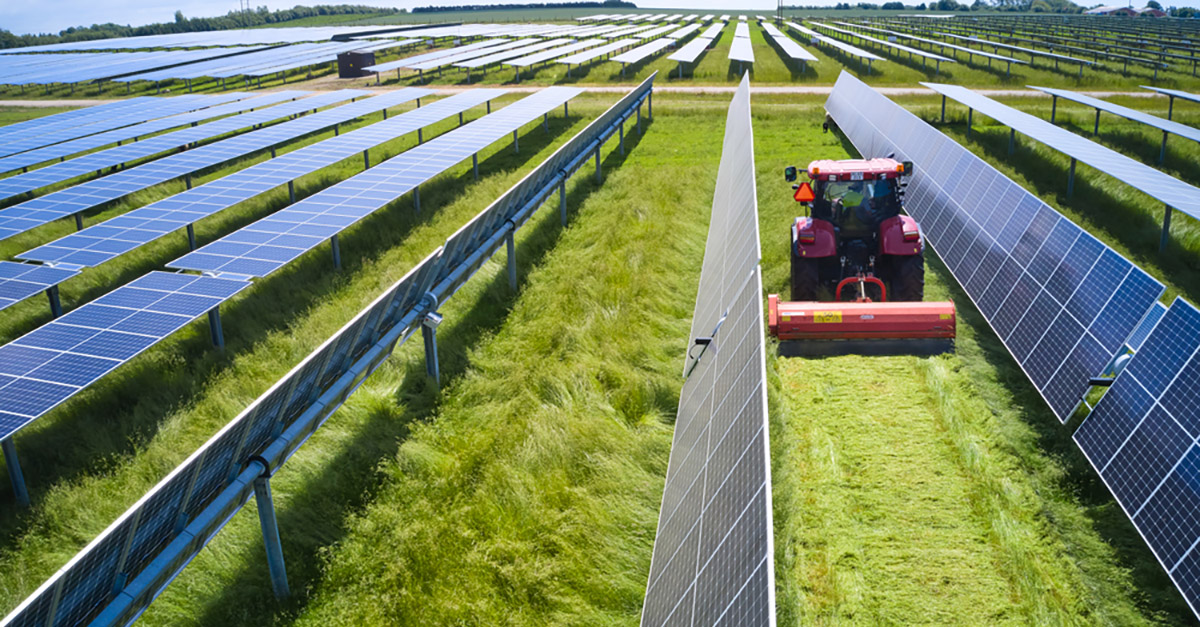
That spread changes what coordination requires. On a commercial job, your framing crew and your MEP crews are in the same building. On a 500-acre solar farm, electrical crews at the far end of the collection system are a mile or more from the substation, and civil crews may be working a completely different zone. That means teams have to coordinate civil and electrical work across zones, with mechanical erection layered into the same tight construction window on utility-scale solar work.
Remote renewable sites can make live coordination difficult. Any coordination approach that depends on a live connection is vulnerable when the work is happening beyond reliable service. That single fact shapes every tool decision on a renewable site.
Civil infrastructure and foundations across a large footprint
A readiness checklist only earns its keep on a renewable site if both the crew finishing one zone and the crew mobilizing into the next can see and update it from wherever they're standing, since they're rarely in the same place.
Civil work sets the early path, and it happens everywhere at once. Access roads, surveying, fencing, and grading come first, then pile driving and racking foundations, all executed in parallel across different zones of the site. Solar racking foundation work is repetitive, and refusal can still become a field variable. When a crew hits refusal, the structural engineer may direct the next step instead of the field crew improvising a fix. Wind foundations are heavier and more sequential. Each turbine requires a large concrete pour, and the anchor bolt template has to be positioned precisely because deviation affects turbine installation.
Electrical crews can run into embedded items, access issues, and unclear drawings when they mobilize before civil readiness is confirmed. Field teams reduce that risk with inter-trade walkdowns before major handovers and joint readiness checklists signed off in the field. The catch on a sprawling site is exactly the coordination problem this section opened with: readiness and confirmation happen in different places, at different times, by different people.
The electrical backbone: collection systems, substations, and grid interconnection
Distance turns an ordinary documentation gap into a real problem here, because the electrical collection system touches every trade's sequencing and spans the entire footprint. A wrong label or a missing record at one combiner box, a mile from the substation, in a zone a different sub finished weeks ago, isn't a same-day fix the way it would be in a commercial electrical room.
On a solar site, DC strings feed combiner boxes, combiners feed inverters that convert to low-voltage AC, pad-mounted transformers step each inverter skid up to 34.5 kV, and underground medium-voltage cable carries that power across the site to a collection substation before interconnection. On utility-scale solar projects, arrays can be grouped into multiple three-phase collection circuits, each with its own array and 34.5 kV cable network terminating at the substation.
Wind farms daisy-chain turbines on underground trunk lines, with multiple turbines per feeder, all bussed at a collector substation. The physical scale is large, and collection systems can stretch across miles of underground and overhead cabling.
A complete field documentation package has to keep these records aligned with the work in place:
- Cable routing plans
- One-line electrical diagrams for AC and DC systems
- Three-line diagrams for the substation
- Module string and combiner wiring diagrams
Every feeder and cable into a load-break disconnect also has to stay traceable in the field through clear labels and unique tags. Before energization, testing and commissioning records have to be captured across the entire footprint, and every one generates a field record that has to be captured where the work happened.
Location-pinned work matters more on renewable builds than on almost any other build type. When a task lives on the drawing, pinned to the exact plan location where the work sits, task location removes the translation step between task assignment and physical location. Fieldwire is a mobile-first jobsite management platform where plans and tasks pin directly to a location. A crew that finds a mislabeled feeder at the edge of the array can drop a pin on the spot, attach a photo, and route it to whoever owns the fix. The problem and the person who needs to see it are no longer separated by a mile of gravel road and a phone call that still leaves them guessing. A verbal description of "out by the array, near the edge" still sends someone walking the site to find the exact spot. A pin dropped on the plan tells them precisely where to go instead.
These sites are chosen for solar and wind resource access, not reliable cell coverage, which makes offline capability non-negotiable rather than a nice-to-have. If a field app needs a live connection to capture a pin or pull up a drawing, it falls short in exactly the situations where you need it most. Fieldwire works fully offline, syncing automatically once a crew reconnects, so a field record gets captured on the spot and stays with the task through sync, even three miles from the nearest signal.
Coordinating BESS systems where they're co-located
When battery energy storage is co-located with solar or wind, the work starts to look like traditional commercial MEP closeout, and documentation rigor becomes especially important. Compared with vertical construction, many solar and wind builds have less conventional building MEP scope. But when a battery storage system is co-located, it brings thermal management, fire detection, fire suppression, ventilation, and gas detection, all of which need the same kind of documented inspection and punch-list discipline as a mechanical room in a commercial building. On the ground, BESS closeout is a documentation and inspection problem.
Thermal management and fire suppression
BESS fire-safety systems are governed by a stack of standards that can gate the project's ability to operate, depending on the installation type, listing, AHJ interpretation, separation, and approved hazard mitigation analysis:
- NFPA 855 is the primary installation standard for applicable systems, covering fire detection and suppression, explosion control, exhaust ventilation, gas detection, and thermal runaway mitigation. For lithium-ion systems, the 20 kWh threshold is a key applicability point.
- IFC Section 1207 governs electrical energy storage systems, and commissioning of ESS is addressed in Section 1207.2.1, while operational permits for ESS are required under separate permit provisions tied to specific installations and mobile deployment operations.
- UL 9540 is the required system-level certification, backed by UL 9540A fire test data.
- Manufacturers own the UL 9540 certification, integrators and site owners own NFPA 855 compliance, and the UL 9540A test report is the handoff document.
Each applicable requirement has to be documented clearly in the field because it can affect the project's ability to close out and operate.
The suppression side carries real field weight. Depending on installation type, battery chemistry, listing, separation, approved hazard mitigation analysis, and AHJ requirements, NFPA 855 may require sprinkler protection per NFPA 13 or another approved fire protection approach. Water is often central to the suppression strategy because cooling the battery ESS is the field priority during suppression.
Lithium-ion batteries can reignite or continue into thermal runaway hours or days after initial extinguishment, which shapes both the suppression design and the long-term emergency response plan. For applicable systems, these requirements have to close out with documented approval through the closeout record.
Inspection and sign-off requirements
Commissioning is a gated, documented sequence, and it maps almost exactly onto commercial MEP closeout. For applicable systems, IFC Section 1207.2.1 requires commissioning before the system is placed in service, and a commissioning report describing the results must be provided to the fire code official prior to final inspection and approval. Functional testing includes power-cable checks and safety-related system testing under the approved commissioning plan.
That closeout package has to document:
- HVAC and thermal management equipment
- Fire alarm and suppression systems
- Warning signs and safety labels
- AHJ and fire staff sign-off authority
- The IFC 1207 commissioning report
- UL 9540 listing verification
- Gas detection functional testing
If you've closed out a commercial mechanical room, you already know this rhythm: fire alarm tie-in, sprinkler test, fire alarm test witnessed by the authority having jurisdiction, final inspection, permission to operate. The sequence is structurally identical; the standards are different. Required commissioning plans and system documentation are part of AHJ review and final approval when they apply to the installation.
Documented inspection and punch-list rigor pay off during BESS closeout. Fieldwire handles punch lists and inspections the same way a superintendent would run them on a commercial mechanical room: conduct the walkthrough on mobile, mark deficiencies directly on the drawings with photos, and track each item through a two-step verification workflow before closeout.
Every punch item is pinned to the plan with a photo and due date, then automatically documented for closeout reporting. When the fire code official needs proof that the suppression functional test passed and the thermal management system was verified, that record is already built from the field entries captured during the test. For teams whose workflow includes system approvals, RFIs and submittals live in the same place, so the documentation trail behind a BESS sign-off stays connected instead of scattered across email.
Remote site logistics and long-lead equipment
Remote-site logistics make delivery visibility and crew coordination especially important. When deliveries of panels, racking, turbine components, and cranes don't line up with the crews waiting to receive them, the receiving plan, work sequence, and crew assignments have to adjust quickly, because coordination gaps force work stoppages and disrupt the flow of materials and labor.
Long-lead equipment compresses the whole coordination window. Generator step-up transformers can have long lead times, and solar and wind projects in advanced stages can still wait on grid connections. Procurement pressure shrinks the window in which field coordination has to run clean.

How field-first, mobile coordination keeps these builds manageable
Field-first coordination keeps distributed renewable crews aligned by closing the gap between where a problem lives and where the people and documents that resolve it are. Only 11% of field personnel report always having information access, and 33% of contractors identify coordination issues as the root cause of construction quality challenges. On a site spanning hundreds of acres with dead zones throughout, crews need more site context than office-centric software retrofitted for crews can provide. Fieldwire is designed for intermittent connectivity on dusty sites, with an interface crews can adopt with minimal training. That matters on renewable jobs, where crews may be changing and adoption has to be fast.
Trade-filtered task views let a PM pull every open task by trade and location, then narrow the view by status, so your crew has a single source of truth instead of chasing status by phone across the site.
For BESS closeout, digital punch lists and inspections give the work the same rigor as a commercial mechanical room, without the paper chase. Gal Cohen, Field Area Manager at JDM Sliding Doors, reported 25% faster closure times after digitizing inspection and documentation workflows on Fieldwire. Field teams can save up to one hour per day per person with Fieldwire, and the platform is trusted on more than 4 million projects worldwide.
Fieldwire gives field teams and office staff a shared, real-time view of documentation, with plans and tasks in the same place whether they're at a combiner box a mile out or back in the trailer.
Start free to see how Fieldwire keeps distributed solar and wind crews on the same page.
Frequently asked questions about renewable energy construction
Renewable projects like solar and wind installations often span large, remote sites with many crews working in parallel, which makes it easy for documentation and punch-list items to fall out of sync. Fieldwire keeps plans, tasks, and inspection records tied to the physical location they belong to, so a problem found at one array or turbine stays attached to that exact spot instead of getting described secondhand. It's also built to work without a live connection, which matters on renewable sites that often sit outside reliable cell coverage.
Before energization, the field record needs to connect the design package to the work installed across the footprint. That includes:
- Cable routing plans
- One-line electrical diagrams for AC and DC systems
- Three-line diagrams for the substation
- Module string and combiner wiring diagrams
- Cable labels and identifiers
- Testing and commissioning records for voltage, IV curve, Megger, and grounding checks
Together, those records show that the installed collection system matches the design before energization.
Civil-to-electrical handoffs should be documented with inter-trade walkdowns and joint readiness checklists signed off in the field. On a sprawling site, that checklist has to be visible and updatable from wherever each crew is standing, with the task pinned to the location, photos attached, and the responsible trade assigned before electrical mobilizes into the zone.
Manufacturers own the UL 9540 certification, while integrators and site owners own NFPA 855 compliance, and the UL 9540A test report is the handoff document. At commissioning, the fire code official may need the commissioning report before final inspection and approval, along with the functional testing record for HVAC, thermal management, fire alarm, suppression, warning signs, and safety labels, depending on the installation and AHJ requirements.


